
Get real AZ-104 Deutsch exam questions for better preparation
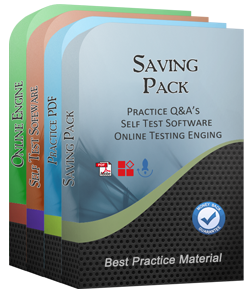
Real Microsoft AZ-104 Deutsch practice exam questions for easy pass!
Updated: Oct 20, 2026
No. of Questions: 481 Questions & Answers with Testing Engine
Download Limit: Unlimited
AZ-104 Deutsch Exams with verified real questions and real answers will help you 100% pass
Our Microsoft AZ-104 Deutsch study material is researched and written by the experts who acquaint with the knowledge in the actual test. The accurate and verified answers can help you prepare well for the actual test. Besides, you can try AZ-104 Deutsch free demo questions to assess the validity of it.
100% Money Back Guarantee
itPass4sure has an unprecedented 99.6% first time pass rate among our customers.  We're so confident of our products that we provide no hassle product exchange.
- Best exam practice material
- Three formats are optional
- 10 years of excellence
- 365 Days Free Updates
- Learn anywhere, anytime
- 100% Safe shopping experience
- Instant Download: Our system will send you the products you purchase in mailbox in a minute after payment. (If not received within 12 hours, please contact us. Note: don't forget to check your spam.)
AZ-104 Deutsch Online Engine

- Online Tool, Convenient, easy to study.
- Instant Online Access
- Supports All Web Browsers
- Practice Online Anytime
- Test History and Performance Review
- Supports Windows / Mac / Android / iOS, etc.
- Try Online Engine Demo
AZ-104 Deutsch Self Test Engine

- Installable Software Application
- Simulates Real Exam Environment
- Builds AZ-104 Deutsch Exam Confidence
- Supports MS Operating System
- Two Modes For Practice
- Practice Offline Anytime
- Software Screenshots
AZ-104 Deutsch Practice Q&A's

- Printable AZ-104 Deutsch PDF Format
- Prepared by AZ-104 Deutsch Experts
- Instant Access to Download
- Study Anywhere, Anytime
- 365 Days Free Updates
- Free AZ-104 Deutsch PDF Demo Available
- Download Q&A's Demo
Main Topics and Subtopics of Microsoft AZ-104 Exam
There are a few different objectives included in the AZ-104 certification test, so the candidates will need to work hard on them. These topics cover the following areas:
- Monitor and Back Up Azure Resources (10-15%)
This subject area is designed to check the examinees’ knowledge and skills in the following areas: monitoring resources with the help of Azure Monitor (customizing and interpreting metrics; customizing Log Analytics; querying and analyzing logs; setting up actions and alerts; customizing Application Insights); implementing recovery and backup (customizing and reviewing backup reports; executing backup and restore operations with the help of Azure Backup; designing a Recovery Services Vault; designing and customizing backup policy; executing site-to-site recovery with the help of Azure Site Recovery).
- Deploy and Manage Azure Compute Resources (25-30%)
In the framework of this topic, the test takers are required to show that they have a grasp of the following skills: monitoring resources with the help of Azure Monitor (monitoring a network; customizing and interpreting metrics; customizing Log Analytics; querying and analyzing logs; setting up actions and alerts; customizing Application Insights); executing recovery and backup (customizing and reviewing backup reports; executing restore and backup operations with the help of Azure Backup; designing Recovery Services Vault; designing and customizing backup policy; executing site-to-site recovery with the help of Azure Site Recovery).
- Manage Azure Governance and Identities (15-20%)
This objective encompasses the following competencies: managing Azure Active Directory objects (designing users and groups; managing group and user properties; managing device settings; executing bulk user updates; managing guest accounts; customizing Azure AD Join; customizing self-service password reset); managing role-based access control (designing a custom role; accessing Azure resources through assigning roles; interpreting access assignments; managing multiple directories); managing governance and subscriptions (customizing Azure policies; customizing resource locks; applying tags; designing and managing resource groups; managing subscriptions; customizing Cost Management; customizing management groups).
- Manage and Configure Virtual Networking (30-35%)
In this topic, the candidates must confirm that they have expertise in implementing and managing virtual networking (designing and customizing VNET peering; customizing private and public IP addresses, subnets, network routes, virtual network, and network interface); customizing name resolution (customizing Azure DNS; customizing custom DNS settings; customizing a private or public DNS zone); securing access to virtual networks (designing security rules; associating an NSG to network interface or a subnet; assessing effective security rules; deploying and configuring Azure Firewall; deploying and customizing Azure Bastion Service); customizing load balancing (customizing Application Gateway; customizing an internal load balancer; customizing load balancing rules; customizing a public load balancer; fixing load balancing); monitoring and fixing virtual networking (monitoring on-premises connectivity; utilizing Network Performance Monitor; utilizing Network Watcher; fixing external networking; troubleshooting virtual network connectivity); integrating an on-premises network with an Azure virtual network (designing and customizing Azure VPN Gateway; designing and customizing VPNs; customizing ExpressRoute; customizing Azure Virtual WAN).
- Implement and Manage Storage (10-15%)
Within this domain, the applicants need to demonstrate the abilities, such as managing storage accounts (customizing network access to storage accounts; designing and customizing storage accounts; generating shared access signature; managing access keys; executing Azure storage replication; customizing Azure AD Authentication for a storage account); managing data in Azure Storage (exporting from Azure job; importing into Azure job; installing and utilizing Azure Storage Explorer; copying data with the help of AZCopy); customizing Azure files and Azure blob storage (designing an Azure file share; designing and customizing Azure File Sync service; customizing Azure blob storage; customizing storage tiers for Azure blobs).
Microsoft AZ-104 Deutsch Exam Overview:
| Certification Vendor: | Microsoft |
|---|---|
| Exam Name: | Microsoft Azure Administrator Exam |
| Exam Number: | AZ-104 |
| Real Exam Qty: | 40-60 |
| Exam Price: | USD $165 |
| Related Certifications: | Microsoft Certified: Azure Administrator Associate |
| Available Languages: | Korean, English, Spanish, French, Portuguese (Brazil), Chinese (Simplified), Russian, Italian, Japanese, German, Chinese (Traditional), Indonesian, Arabic (Saudi Arabia) |
| Exam Duration: | 120 minutes |
| Passing Score: | 700 out of 1000 |
| Exam Format: | Multiple Choice (Multiple Answer), Hot Area, Drag and Drop, Case Study, Multiple Choice (Single Answer) |
| Sample Questions: | Microsoft AZ-104 Deutsch Sample Questions |
| Exam Way: | Online (via Pearson VUE) or at a Pearson VUE testing center |
| Pre Condition: | Candidates should have at least six months of hands-on experience administering Azure, along with a strong understanding of core Azure services, Azure workloads, security, and governance. Experience with PowerShell, Azure CLI, Azure portal, and Azure Resource Manager templates is also recommended. |
| Official Syllabus URL: | https://learn.microsoft.com/en-us/credentials/certifications/resources/study-guides/az-104 |
Microsoft AZ-104 Exam Syllabus Topics:
| Topic | Details |
|---|---|
Manage Azure identities and governance (15-20%) | |
| Manage Azure Active Directory (Azure AD) objects | -create users and groups -create administrative units -manage user and group properties -manage device settings -perform bulk user updates -manage guest accounts -configure Azure AD Join -configure self-service password reset |
| Manage role-based access control (RBAC) | -create a custom role - provide access to Azure resources by assigning roles at different scopes -interpret access assignments |
| Manage subscriptions and governance | -configure Azure policies -configure resource locks -apply and manage tags on resources - manage resource groups -manage subscriptions - manage costs -configure management groups |
Implement and manage storage (15-20%) | |
| Secure storage | -configure network access to storage accounts -create and configure storage accounts -generate shared access signature (SAS) tokens -manage access keys -configure Azure AD Authentication for a storage account - Configure access to Azure Files |
| Manage Storage | -export from Azure job -import into Azure job -install and use Azure Storage Explorer -copy data by using AZCopy - implement Azure Storage replication - configure blob object replication |
| Configure Azure files and Azure blob storage | - create an Azure file share -create and configure Azure File Sync service -configure Azure Blob Storage -configure storage tiers - configure blob lifecycle management |
Deploy and manage Azure compute resources (20-25%) | |
| Automate deployment of virtual machines (VMs) by using Azure Resource Manager templates | - modify an Azure Resource Manager template -configure a virtual hard disk (VHD) template - deploy from a template -save a deployment as an Azure Resource Manager template - deploy virtual machine extensions |
| Configure VMs | -configure Azure Disk Encryption -move VMs from one resource group to another -manage VM sizes -add data disks -configure networking -redeploy VMs - configure high availability - deploy and configure scale sets |
| Create and configure containers | - configure sizing and scaling for Azure Container Instances -configure container groups for Azure Container Instances -configure storage for Azure Kubernetes Service (AKS) - configure scaling for AKS - configure network connections for AKS - upgrade an AKS cluster |
| Create and configure Azure App Service | - create an App Service plan -configure scaling settings in an App Service plan - create an App Service - secure an App Service - configure custom domain names - configure backup for an App Service - configure networking settings - configure deployment settings |
Configure and manage virtual networking (25-30%) | |
| Implement and manage virtual networking | - create and configure virtual networks, including peering - configure private and public IP addresses - configure user-defined network routes - implement subnets - configure endpoints on subnets - configure private endpoints- configure Azure DNS, including custom DNS settings and private or public DNS zones |
| Secure access to virtual networks | -create security rules -associate a network security group (NSG) to a subnet or network interface -evaluate effective security rules -implement Azure Firewall -implement Azure Bastion |
| Configure load balancing | -configure Azure Application Gateway -configure an internal or public load balancer -troubleshoot load balancing |
| Monitor and troubleshoot virtual networking | -monitor on-premises connectivity - configure and useAzure Monitor for Networks -use Azure Network Watcher -troubleshoot external networking -troubleshoot virtual network connectivity |
| Integrate an on-premises network with an Azure virtual network | -create and configure Azure VPN Gateway - create and configure Azure ExpressRoute -configure Azure Virtual WAN |
Monitor and back up Azure resources (10-15%) | |
| Monitor resources by using Azure Monitor | -configure and interpret metrics -configure Azure Monitor Logs -query and analyze logs -set up alerts and actions - configure Application Insights |
| Implement backup and recovery | - create a Recovery Services Vault -create and configure backup policy - perform backup and restore operations by using Azure Backup -perform site-to-site recovery by using Azure Site Recovery - configure and review backup reports |
Schedule exam
Languages: English, Chinese (Simplified), Korean, Japanese, French, German, Spanish
Retirement date: none
This exam measures your ability to accomplish the following technical tasks: manage Azure identities and governance; implement and manage storage; deploy and manage Azure compute resources; configure and manage virtual networking; and monitor and back up Azure resources.
Reference: https://docs.microsoft.com/en-us/learn/certifications/exams/az-104
Module 2: Storage Implementation and Management
The second domain throws light on the Azure implementation and storage, including the administration of storage accounts, setting up blob storage alongside Azure files, and handling data management tasks for Azure Storage. The details include the replication implementation, Azure account generation, import as well as export from Azure jobs, utilizing AZCopy, the configuration of blob object replication and lifecycle management, etc.
Microsoft Azure Administrator (AZ-104 Deutsch Version) Sample Questions:
Sie müssen Rolle1 implementieren.
Welchen Befehl sollten Sie ausführen, bevor Sie Rolle1 erstellen? Wählen Sie dazu die entsprechenden Optionen im Antwortbereich aus.
HINWEIS: Jede richtige Auswahl zählt als ein Punkt.
Ausstellen
Correct Answer:

Explanation:
Detailed Explanation
The standard way to base a new custom role on an existing built-in role is to first export the built-in role ' s definition as JSON, then edit that JSON (changing Name, IsCustom, Id, and adjusting Actions/NotActions
/AssignableScopes) before submitting it with New-AzRoleDefinition -InputFile. That export step is exactly Get-AzRoleDefinition -Name " Reader " | ConvertTo-Json, run before any editing or creation occurs - matching the underlying logic tested by this hotspot. ConvertFrom-Json, ConvertFrom-String, and ConvertTo- Xml are all distractors that either operate in the wrong direction or produce a format New-AzRoleDefinition cannot consume. CURRENCY NOTE: the AzureRM PowerShell module (and therefore the cmdlet name Get- AzureRmRoleDefinition shown in the original exhibit) was fully retired on 29 February 2024. All current PowerShell work should use the Az module ' s equivalent cmdlet, Get- AzRoleDefinition - functionally identical in this pipeline but the only supported cmdlet name today. Administrators following this guide should substitute Az module cmdlet names throughout.
Official Reference
Create or update Azure custom roles using Azure PowerShell - https://learn.microsoft.com/en-us/azure/role- based-access-control/custom-roles-powershell
Sie haben eine Azure App Service-App namens WebApp1, die zwei Ordner namens Folder1 und Folder2 enthält.
Sie müssen eine tägliche Sicherung von WebApp1 konfigurieren. Die Lösung muss sicherstellen, dass Ordner2 von der Sicherung ausgeschlossen wird.
Was sollten Sie zuerst erstellen und wie können Sie Fokier2 ausschließen? Wählen Sie dazu die entsprechenden Optionen im Antwortbereich aus.
HINWEIS: Jede richtige Auswahl zählt als ein Punkt.
Ausstellen
Correct Answer:

Explanation:
Detailed Explanation
App Service ' s native backup feature (distinct from Azure Backup / Recovery Services vaults, which do not back up App Service content this way) stores each backup as a set of files inside a container in a customer- provided Azure Storage account, so a storage account (with a blob container) must exist before a backup schedule can be configured - a Recovery Services vault, Backup vault, and plain resource group are not valid backup destinations for this feature. To exclude specific files or folders such as Folder2 from an App Service backup, Microsoft Learn documents placing a file named _backup.filter in the site ' s site/wwwroot directory, listing the paths to exclude, one per line, prefixed appropriately; the backup engine reads this file at backup time and skips the listed paths. A backup policy, a lock, and a WebJob are unrelated Azure constructs that play no role in App Service ' s built-in backup/restore feature. The correct selections are an Azure Storage account and a _backup.filter file.
Official Reference
Back up a custom container in App Service / Exclude files from a backup - https://learn.microsoft.com/en-us
/azure/app-service/manage-backup
Sie besitzen ein Azure-Abonnement, das die in der folgenden Tabelle aufgeführten Ressourcen enthält.
Die Azure-Richtlinie „Nicht zulässige Ressourcentypen“, für die die Richtlinienerzwingung aktiviert ist, ist RG1 zugewiesen und verwendet die folgenden Parameter:
Microsoft.Netzwerk/VirtuelleNetzwerke
Microsoft.Compute/virtualMachines
In RG1 müssen Sie eine neue virtuelle Maschine namens VM2 erstellen, die mit VNET1 verbunden ist. Was sollten Sie als Erstes tun?
Ausstellen
- A. Microsoft.Compute/virtualMachines aus der Richtlinie entfernen.
- B. AdjustsubnettoVNET1.
- C. Entfernen Sie Microsoft.Network/virtualNetworks aus der Richtlinie.
- D. Erstellen Sie eine Azure Resource Manager-Vorlage.
Correct Answer: A 🗳️
Explanation: Only visible for itPass4sure members. You can sign-up / login (it's free).
Sie müssen die Verbindungsbedingungen für das New Yorker Büro erfüllen.
Was sollten Sie tun? Wählen Sie zur Beantwortung die entsprechenden Optionen im Antwortbereich aus.
HINWEIS: Jede richtige Auswahl zählt als ein Punkt.
Ausstellen
Correct Answer:

Explanation:
Detailed Explanation
" Connect over the Internet by using an encrypted connection " is the defining description of a Site-to-Site (S2S) IPsec/IKE VPN, as opposed to ExpressRoute, which is a private, non-Internet circuit and therefore does not satisfy " over the Internet. " Building an S2S VPN in Azure requires two Azure-side resources: a virtual network gateway (of type VPN) attached to VNet1, which terminates the encrypted tunnel on the Azure side, and a local network gateway, which represents the New York office ' s on-premises VPN endpoint (its public IP address and on-premises address prefixes) so Azure knows how to route traffic to it. Creating only a virtual network gateway, or only an ExpressRoute circuit, is insufficient - the local network gateway is required to define the on-premises side of an S2S connection. On the New York office side, the corresponding action is to configure a site-to-site VPN connection on their firewall/VPN device (per the case study, each office ' s firewall can act as a VPN device), establishing the matching IPsec tunnel to Azure. DirectAccess and Web Application Proxy are unrelated legacy remote-access technologies.
Official Reference
Create a Site-to-Site VPN connection - https://learn.microsoft.com/en-us/azure/vpn-gateway/tutorial-site-to-site-portal
Sie besitzen ein Azure-Abonnement.
Sie planen, mithilfe einer Azure Resource Manager-Vorlage ein virtuelles Netzwerk namens VNET1 bereitzustellen, das Azure Bastion verwenden wird.
Wie sollten Sie die Vorlage ausfüllen? Wählen Sie dazu die entsprechenden Optionen im Antwortbereich aus.
HINWEIS: Jede richtige Auswahl zählt als ein Punkt.
Ausstellen
Correct Answer:

Explanation:
CORRECTED ANSWER: Subnet name: AzureBastionSubnet | Address prefix: 10.10.10.0/27) Detailed Explanation Azure Bastion requires a dedicated subnet with the exact, case-sensitive reserved name AzureBastionSubnet
- Azure will not deploy Bastion into a subnet with any other name, ruling out AzureFirewallSubnet (reserved for Azure Firewall instead), LAN01, and RemoteAccessSubnet. CURRENCY UPDATE: Microsoft Learn ' s current Azure Bastion configuration settings documentation states the subnet size " must be /26 or larger (/25, /24, etc.) " for Bastion resources deployed on or after 2 November 2021, with /26 specifically recommended to support host-scaling features - the older /27 minimum has been retired for new deployments. None of this question ' s offered address prefixes (/27, /29, /30) actually satisfies the current /26- or-larger requirement: /29 and /30 are far too small to ever have been valid, and /27, while it was the historical minimum before November 2021, no longer meets today ' s requirement for a new deployment. If forced to choose only among the given options, /27 is the closest/least-wrong, but administrators building a new template today should size AzureBastionSubnet at /26 or larger, which is not represented among this question
' s choices.
Official Reference
About Azure Bastion configuration settings - https://learn.microsoft.com/en-us/azure/bastion/configuration- settings
Viewing page 1 out of 97 pages.
Viewing questions 1-5 out of 481 questions.
PASSED. I used it and some question in test not contained in this dump. But the dump enough for fulfillment.
 By Kerwin
Passed today. This AZ-104-Deutsch dump is 100% valid. And yes, you can pass too with the help of valid braindumps.
By Mick
Passed today in Microsoft AZ-104-Deutsch dump material is still valid but there were 7 to 8 new questions in the exam.
By Hugo
I passed with the Microsoft AZ-104-Deutsch learning materials, Thank you so much.
By Lawrence
I passed today with score 80%. I confirm that it's valid in UK. Focus on "Correct answer" and forget the "Answer X from real test". I had free new questions.
By Morton
Questions from this Microsoft AZ-104-Deutsch dump are 100% valid... not all answers. I passed this exam a few days ago (in France) and got these results.
By Randolph
Disclaimer Policy: The site does not guarantee the content of the comments. Because of the different time and the changes in the scope of the exam, it can produce different effect. Before you purchase the dump, please carefully read the product introduction from the page. In addition, please be advised the site will not be responsible for the content of the comments and contradictions between users.

itPass4sure offers the most current and accurate practice questions you are looking for. Our AZ-104 Deutsch exam materials are not only the best option for certification but also enhances your skill to an advance level. Use our AZ-104 Deutsch tutorial study material and get ready to pass the certification exam on the first try.
In addition, we have the money back guarantee on the condition of failure. You just need to show us the failure score report and we will refund you after confirming.
Frequently Asked Questions
What kinds of study material itPass4sure provides?
Test Engine: AZ-104 Deutsch study test engine can be downloaded and run on your own devices. Practice the test on the interactive & simulated environment.
PDF (duplicate of the test engine): the contents are the same as the test engine, support printing.
How long can I get the AZ-104 Deutsch products after purchase?
You will receive an email attached with the AZ-104 Deutsch study material within 5-10 minutes, and then you can instantly download it for study. If you do not get the study material after purchase, please contact us with email immediately.
Do you have any discounts?
We offer some discounts to our customers. There is no limit to some special discount. You can check regularly of our site to get the coupons.
Can I get the updated AZ-104 Deutsch study material and how to get?
Yes, you will enjoy one year free update after purchase. If there is any update, our system will automatically send the updated study material to your payment email.
What's the applicable operating system of the AZ-104 Deutsch test engine?
Online Test Engine can supports Windows / Mac / Android / iOS, etc., because it is the software based on WEB browser. You can use it on any electronic device and practice with self-paced.
Online Test Engine supports offline practice, while the precondition is that you should run it with the internet at the first time.
Self Test Engine is suitable for windows operating system, running on the Java environment, and can install on multiple computers.
PDF Version: can be read under the Adobe reader, or many other free readers, including OpenOffice, Foxit Reader and Google Docs.
How does your Testing Engine works?
Once download and installed on your PC, you can practice AZ-104 Deutsch test questions, review your questions & answers using two different options 'practice exam' and 'virtual exam'.
Virtual Exam - test yourself with exam questions with a time limit.
Practice Exam - review exam questions one by one, see correct answers.
How often do you release your AZ-104 Deutsch products updates?
All the products are updated frequently but not on a fixed date. Our professional team pays a great attention to the exam updates and they always upgrade the content accordingly.
Do you have money back policy? How can I get refund in case of failure?
Yes. We have the money back guarantee in case of failure by our products. The process of money back is very simple: you just need to show us your failure score report within 60 days from the date of purchase of the exam. We will then verify the authenticity of documents submitted and arrange the refund after receiving the email and confirmation process. The money will be back to your payment account within 7 days.
Over 67295+ Satisfied Customers
Our Clients













Try the pass4sure demo questions before you buy, and to have a better understanding about our complete study materail in advance. Our valid and accurate questions will help you pass the real test at first attempt.
Contact Us
From Monday to Saturday
Support: Contact now
If you have any question please leave me your email address, we will reply and send email to you in 12 hours.
Copyright © 2026 ITPASS4SURE.COM. All rights reserved. All trademarks are the property of their respective owners and we don't provide actual questions from any vendor. Privacy Policy